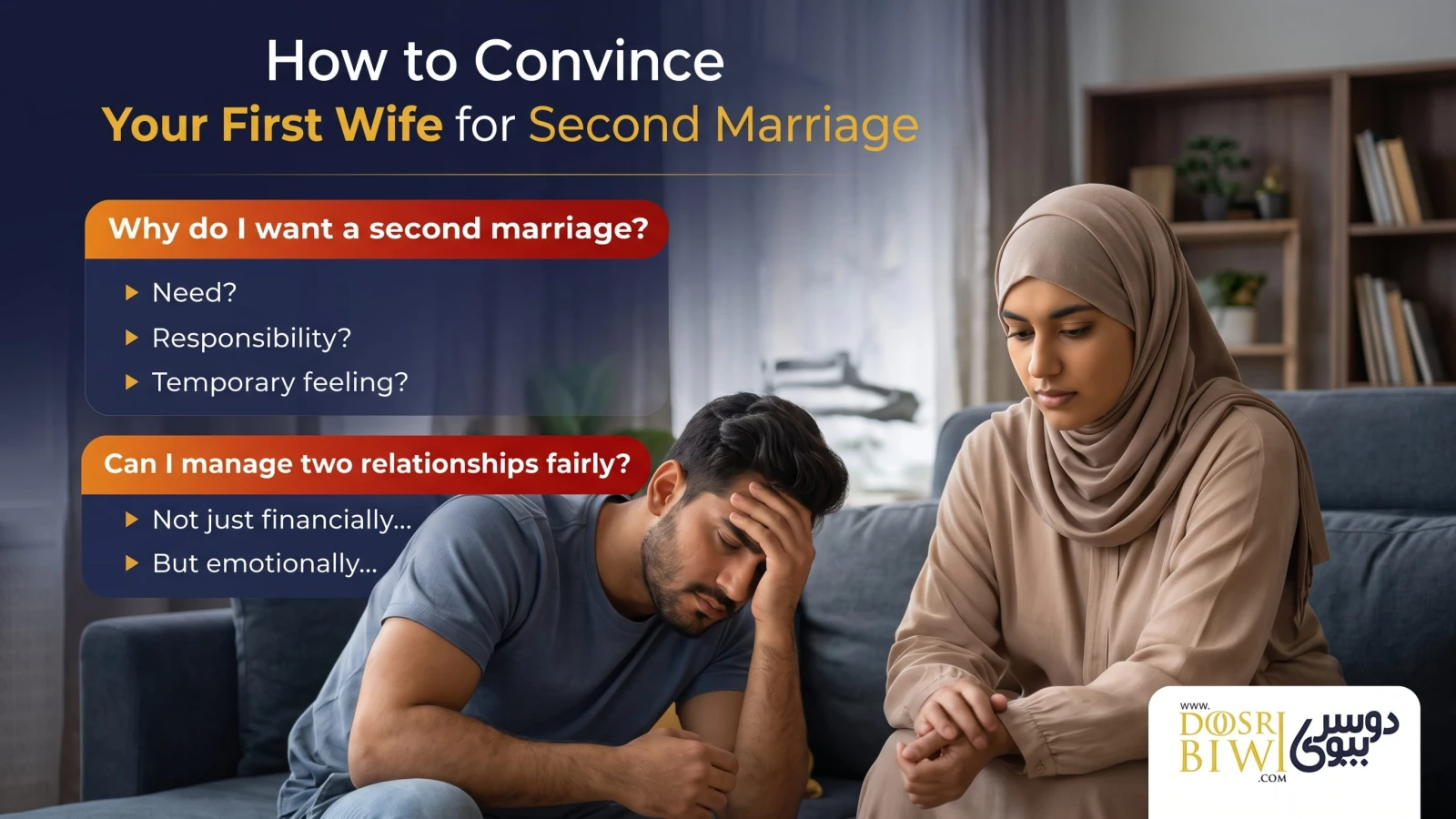
First—Be Real With Yourself
Before bringing this topic up, ask yourself honestly why you want a second marriage. Is it a genuine need, a sense of responsibility, or just a temporary feeling? If you are not clear about your own reasons, you will never be able to explain them properly to your wife. You should also reflect on whether you can truly manage two families financially, emotionally, and mentally. A second marriage is not just a right; it is a major responsibility that requires serious commitment.
Timing Matters More Than You Think
Do not bring this topic up randomly or at the wrong moment. Avoid discussing it during arguments, when she is already upset, or in front of others. Choose a calm and private setting where both of you can talk openly. The way you begin this conversation will strongly influence how it unfolds and eventually ends.
Don’t Start With “It’s My Right”
One of the biggest mistakes is beginning the conversation by asserting your right. Even though it may be allowed religiously, starting this way creates conflict instead of understanding. Approach the discussion with honesty and respect. Appreciate her, acknowledge her role in your life, and make her feel secure. What she hears is not just the idea of a second marriage; what she feels is doubt about her own value.
Be Ready for Her Reaction
No matter how carefully you approach the topic, she may feel hurt, angry, insecure, or scared. These emotions are completely natural. Do not expect immediate acceptance or agreement. Give her the space to process her feelings without trying to shut her down or win the argument. Sometimes, listening quietly is more powerful than trying to justify yourself.
Reassurance Is Not Optional
If you are serious about this decision, reassurance becomes essential. She needs to feel that she is still important, that her place in your life is secure, and that she is not being replaced. Most importantly, your actions must align with your words. Empty promises will only increase her fears and damage trust further.
Talk About Practical Things Clearly
Beyond emotions, there are practical concerns that must be addressed. Questions about finances, children, time management, and social impact will naturally arise. If you do not have clear answers, it will create uncertainty and fear. Be honest in your responses, and if you do not yet have clarity on certain aspects, admit it openly instead of avoiding the discussion.
What You Should Never Do
There are certain actions that can permanently damage trust. Hiding things, secretly talking to another woman, or announcing a decision without discussion will only hurt your relationship. Using religion as pressure or comparing your wife to someone else can also cause deep emotional harm. These behaviors do not solve problems—they create lasting wounds.
This Is Not a One-Time Conversation
This is not a discussion that will be resolved in a single sitting. It will require time, multiple conversations, and emotional ups and downs. Patience is essential. Rushing the process will only make things worse and may lead to irreversible damage in your relationship.
Be Prepared for a “No”
Even after careful discussions and efforts, your wife may not accept the idea. You must be prepared for that possibility. At that point, you need to ask yourself whether pursuing a second marriage is worth risking your current relationship. Every decision comes with consequences, and this one is no different.
Justice Is More Than Money
Many people assume that financial stability alone is enough to justify a second marriage, but fairness goes far beyond money. It includes equal time, attention, respect, and emotional balance. Maintaining this level of fairness is much more difficult than simply providing financial support.
A Simple Reality Most People Ignore
A second marriage does not affect only you. It impacts your wife, your children, your extended family, and your overall peace of mind. If handled poorly, it can create long-term emotional damage. If handled wisely, it may work—but that requires a high level of maturity and responsibility.
Final Thoughts
Convincing your first wife is not about pressure, authority, or winning an argument. It is about respect, honesty, patience, and responsibility. Without these, no explanation will ever be enough. If you are truly serious about a second marriage, the right approach must begin from the very first conversation.